Building a Company-Wide Framework to Leverage Real Estate Information
Dramatically Enhancing Initial Response Speed and Deal Evaluation Volume with REMETIS
Fujita Corporation
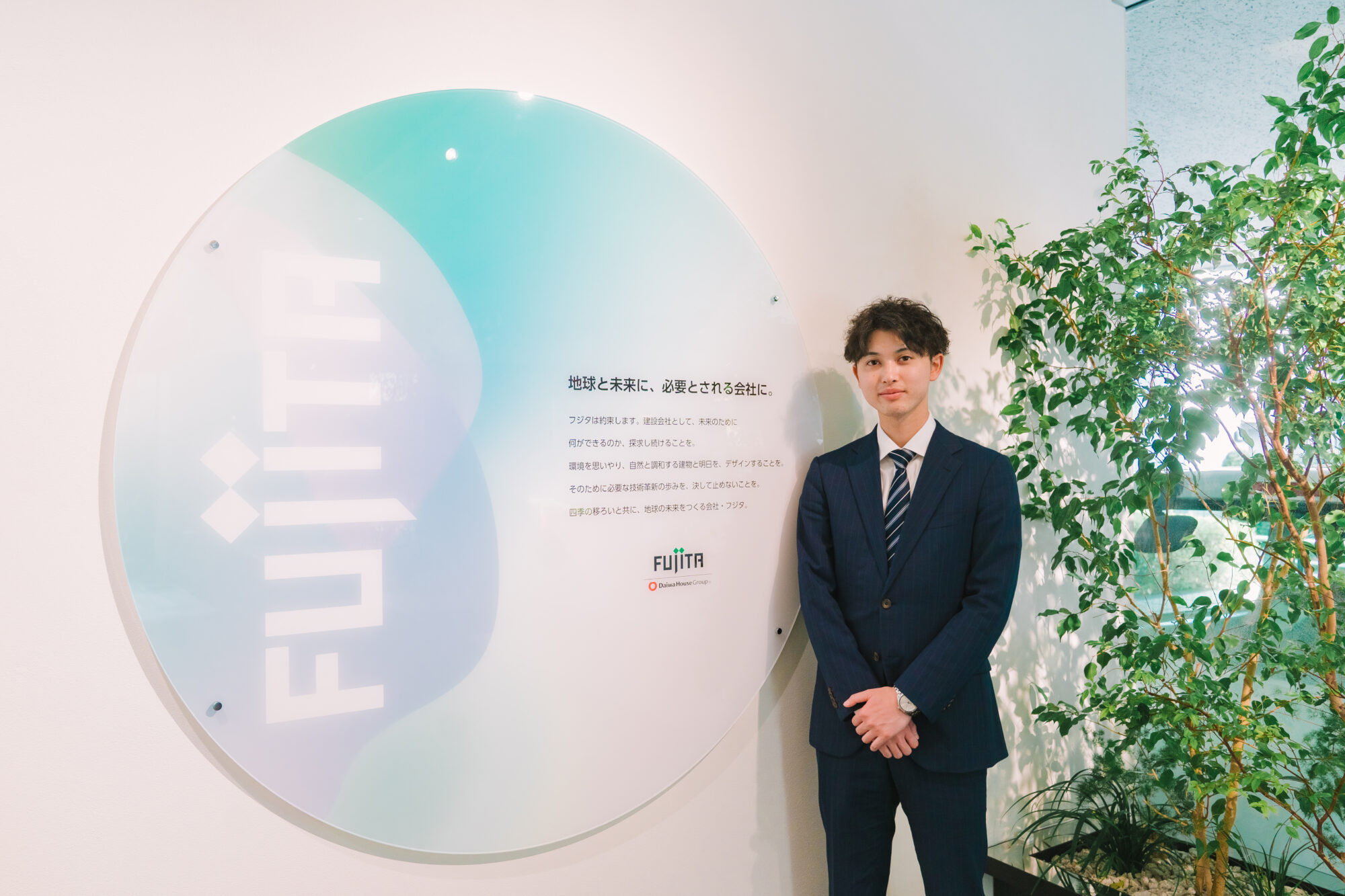
The company is a comprehensiveGeneral Contractorwith a history spanning more than 100 years. In 2013, it became a member of the Daiwa House Group, and in 2015 merged with Daiwa Odakyu Construction. By combining its accumulated expertise with the comprehensive strengths of the Daiwa House Group, the company has expanded its operations beyond construction into a wide range of businesses, including urban regeneration and real estate development. Drawing on the technologies and know-how cultivated over generations, the company continues to create environments that support comfortable, safe, and secure living.
Sales Headquarters
Planning and Sales Coordination Department, Planning and Development Department
Mr. Yukai Sakaiya
In the real estate business, the effective utilization of information is a critical factor in determining success. At Fujita Corporation, business transformation enabled by REMETIS is steadily progressing. We spoke with the company about how REMETIS has been adopted across departments and how long-standing challenges in real estate information management have been resolved since its introduction.
Problem
・Significant time required for registering and searching property information
・Heavy operational and maintenance burden associated with a custom-built system
・Absence of a platform enabling cross-departmental information sharing
Solution
・Automation reduced operational workload, nearly doubling the number of registered properties year over year
・Shift from routine administrative tasks to higher-value activities, improving project feasibility
・Advancement of cross-departmental information sharing, leading to the creation of collaborative projects
Please tell us about Fujita Corporation's real estate business and the characteristics of the division to which you belong.
Sakaiya
Our company develops a wide range of town development projects by leveraging the expertise of a comprehensive General Contractor, including civil engineering and architectural technologies, together with our extensive experience and proven track record. Nationwide, we have delivered more than 1,800 hectares in land readjustment projects, over 30 urban redevelopment projects, and more than 700 equivalent-exchange projects primarily in the Tokyo metropolitan area.
In real estate development projects where we acquire development sites ourselves, we have accumulated diverse experience across asset types such as logistics facilities, hotels, and residential properties, both in Japan and overseas. We have also steadily built results in PFI projects and land utilization initiatives. By integrating planning and proposal capabilities grounded in construction technology, coordination expertise for complex stakeholder interests, diverse development methodologies, and the ability to manage high-difficulty projects requiring regulatory approvals, we promote our real estate business by fully leveraging Fujita’s comprehensive strengths.
Please tell us about the roles and missions of each business division.
Sakaiya
In the Planning and Development Department within the Sales Division, where I belong, we serve two primary roles. The first is to work closely with sales divisions across all branches to promote proposal-based and project-creation sales activities aimed at securing construction contracts. The second is to expand our real estate investment business by collecting and centrally managing property information from across the organization, while supporting initiatives to maximize profitability.
In accordance with our corporate policy to place greater emphasis on real estate investment starting this fiscal year, our department has strengthened efforts related to the collection and evaluation of property information. While we are capable of handling projects nationwide across all asset types, hotel assets are primarily managed by our department, which results in a particularly high volume of hotel-related project evaluations.

What were some of the business challenges you faced prior to implementing REMETIS?
Sakaiya
Previously, we managed real estate information using a custom-built internal system. However, registering and searching for information required a considerable amount of time. Because the system was list-based, it was difficult to visually determine whether information had already been obtained. In addition, the large number of required input fields increased the burden of both registration and maintenance. Information entry also tended to rely on individual practices, resulting in missed searches. As a result, handling real estate information involved a substantial operational workload.
Another major challenge was low system utilization. Our internal policy required all sales divisions—not only the real estate investment division—to register collected real estate information in the system. This was because, as a comprehensive General Contractor , our sales teams often acquire information through long-standing relationships. However, due to limited visual clarity and the absence of clearly defined registration rules, awareness and understanding differed among departments, and in practice the system was used almost exclusively by the real estate investment division.
How did you find out about REMETIS?
Sakaiya
We were introduced to REMETIS through another REMETIS user company. At that time, our internal initiatives to promote DX, including discussions around upgrading our existing systems, were becoming increasingly active.
Although we compared multiple services, we found REMETIS particularly appealing due to its ability to automatically import property overview PDFs, a feature that made potential time savings easy to understand. We promptly applied for a trial, and after evaluating the system, we found it highly intuitive with a clear and user-friendly UI. We felt confident that even sales staff with limited experience using digital tools would find it approachable and engaging.
Why did you decide to implement REMETIS to solve this problem?
Sakaiya
We determined that REMETIS could effectively address our operational challenges through its feature set. Time savings could be achieved through map-based information visualization and automatic PDF import. We also expected system usage to improve due to its ease of operation and the addition of features not available in our previous system, such as needs matching and centralized access to public data and market information.
From an operational cost perspective, we also sought to transition away from our custom-built system. Because it was developed internally, ongoing maintenance and management required significant internal resources. Through repeated discussions with RESTAR, we became confident that adopting REMETIS would reduce operational burdens while allowing us to benefit from continuous feature enhancements aligned with market trends.
What were the challenges you faced when implementing REMETIS, and how did you overcome them?
Sakaiya
As mentioned earlier, our previous system lacked clearly defined operational rules. Taking the introduction of REMETIS as an opportunity, we fundamentally reviewed our entire workflow—from the acquisition of real estate information to registration, evaluation, and sharing.
Referring to the operational manuals provided by RESTAR, we established detailed rules, including standardized property naming conventions and transaction-type tagging. By leveraging REMETIS features such as tags, status indicators, and internal memo functionality, we incorporated these rules into our daily operations.
To encourage adoption, we conducted online training sessions at the start of operations and distributed instructional videos and manuals via our internal intranet. We also held branch-level and offline sessions as needed. In addition, we received support from RESTAR even prior to implementation, which helped us clarify the purpose of adoption and prepare smoothly. These early initiatives contributed to strong adoption, and REMETIS is now widely utilized across the organization.
Please share your honest impressions after using REMETIS.
Sakaiya
We consider REMETIS to be an excellent system that incorporates virtually all the features we had long desired for real estate information management. The automatic import functionality and integration with map services are precisely the capabilities we needed, and they have led to a dramatic reduction in working time.
In addition to strong support for external research and material preparation, REMETIS also offers a needs-matching function. While we have not yet fully utilized every feature, we believe the platform holds significant potential to transform our operations—shifting the focus from simple data entry to advanced analysis and matching, and fundamentally evolving the nature of our work.
We also value the robust support structure, which allows us to easily consult with RESTAR whenever assistance is needed.
How has the use of REMETIS changed your business?
Sakaiya
The speed of our initial response after acquiring property information has improved dramatically. Previously, because searches were time-consuming, even after receiving information from clients, we needed to take it back for confirmation. With REMETIS, we can now verify information immediately, even during client meetings.
Because essential data such as urban planning information and market data can be reviewed in a centralized manner, both client response times and internal decision-making processes have become significantly faster. As a result, the number of projects submitted for internal review had nearly doubled year over year as of December.
Furthermore, by setting KPIs related to real estate information acquisition for all sales members, the number of registered properties increased substantially. Within just six months of the current fiscal year, registrations exceeded the previous year’s total, and by December had more than doubled on a full-year basis.
While both the number of evaluated projects and registered properties increased significantly, the reduction of unnecessary tasks allowed us to dedicate more time to essential activities such as investigation, evaluation, and internal discussions, thereby improving the reliability of project progress.
Although low system usage had been an issue with the previous system, since introducing REMETIS we have received inquiries about usage from other departments, clearly demonstrating that utilization is expanding beyond departmental boundaries.

Could you please explain what role REMETIS plays in supporting the company’s DX initiatives?
Sakaiya
REMETIS plays a key role in bridging the gap between construction sales and the real estate investment division. In line with our company’s strategic focus on real estate, departments are now connected through REMETIS, enabling them to work toward shared objectives.
We have already seen examples of cross-departmental collaborative projects, and we believe REMETIS has also contributed to increasing opportunities for internal communication. These positive effects extend beyond our real estate business and are also benefiting our construction operations.
What do you hope to see from REMETIS in the future?
Sakaiya
We would welcome further enhancements to the project profitability simulation features. If internal performance data could be referenced directly within REMETIS, we believe efficiency in preparing financial projections would improve even further.
Each time we hear about new REMETIS updates during our regular meetings with RESTAR, we are reminded of how rapidly the platform is evolving. We intend to continue exploring more effective ways to utilize REMETIS in order to further accelerate our business, and we look forward to continuing our partnership with RESTAR as a trusted and reliable partner.

※The above content is current as of January 2026.